
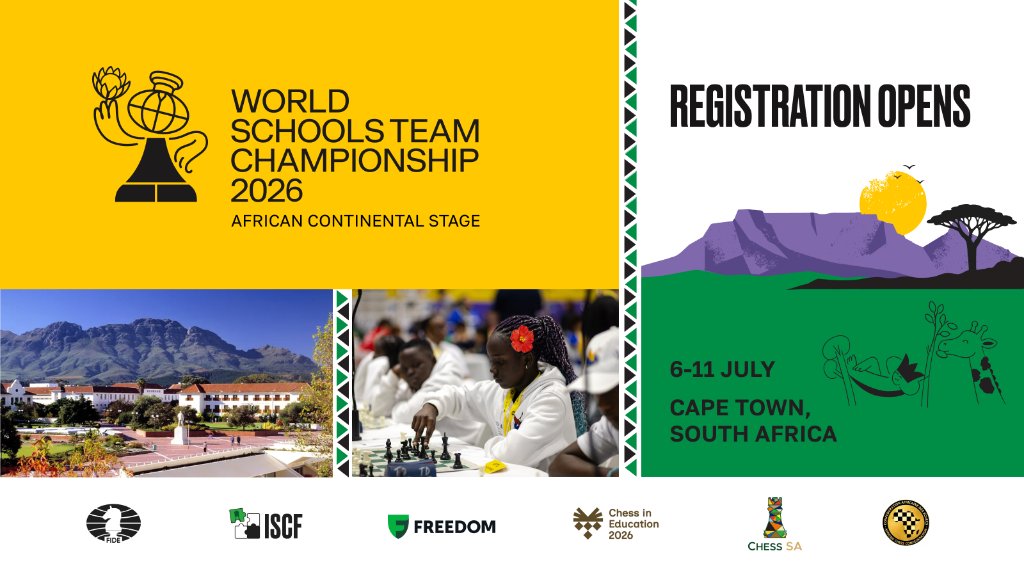

Uganda's Sr. Miriam Duggan Primary School won the African Continental Stage of the FIDE ISCF World Schools Team Championship 2026. The team completed all eight rounds without losing a single match and claimed the gold medal. Kenya's Moi Nyeri Complex Primary School took silver, while South Africa's Welgemoed Primary School secured bronze.
The story of the Ugandan team became one of the tournament's defining narratives. Its players trained at the Kamwokya Teens Chess Club and Academy, which works with children from a disadvantaged urban community. Patrick Mukasa, the academy's founder and the team's coach, said chess gives children the opportunity to travel, represent their country and move beyond the circumstances in which they grew up.
I'm so humbled by this fantastic performance. I believe in my boys because we are the top seed, the best in the country, the best in the region. These are kids from an academy in the ghetto, disadvantaged kids, vulnerable to all the problems that come with that. I trained them so that they can get the opportunities that come with chess. Chess is improving them, they are moving around the world, and I'm so proud that wonderful brains from such areas can serve our country and the entire world.
— Patrick Mukasa, Founder & Coach, Kamwokya Teens Chess Club and Academy
A Championship of Opportunities
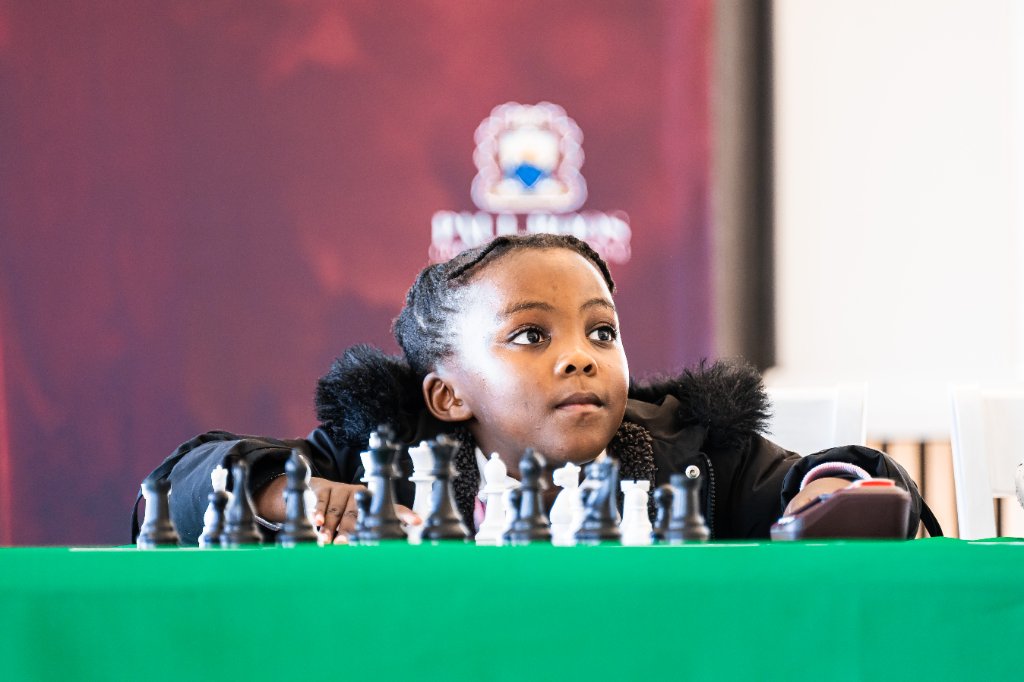
Chess creates pathways for young players from all backgrounds to compete on an international stage.
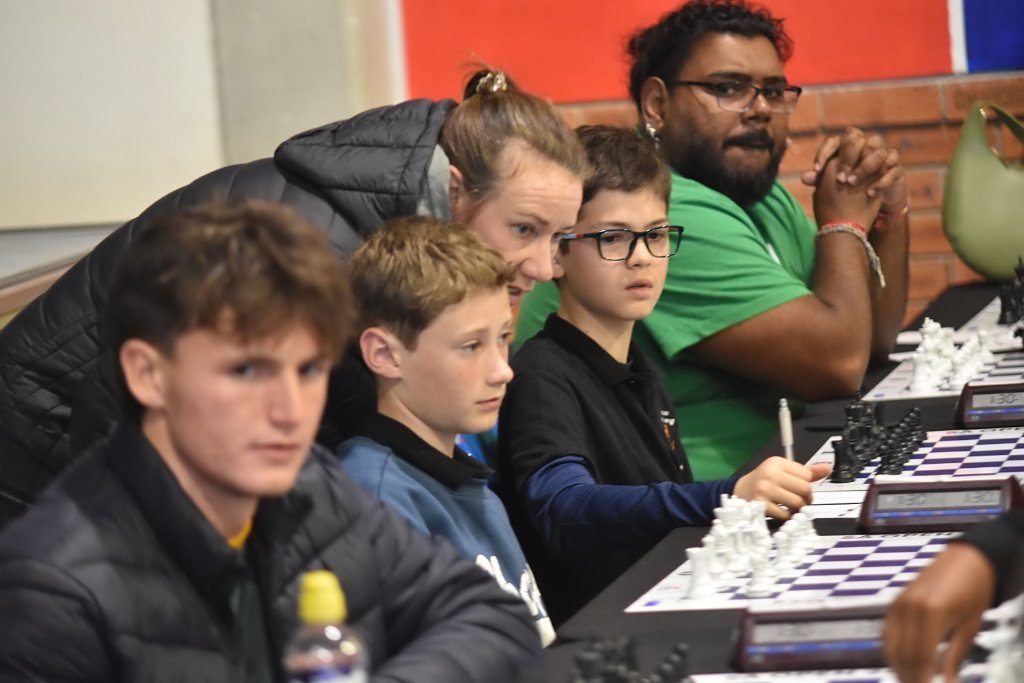
The African stage brought together 26 school teams from 22 countries. Each team consisted of four starting players and one reserve, with both boys and girls represented in the line-ups.
Another figure was particularly notable: 91 participants were internationally unrated, and all were competing on an international stage for the first time.
In addition to eight rounds of competition, the championship programme included masterclasses, educational sessions, chess quizzes and cultural activities. The children met peers from other countries, represented their schools and became part of a broader international chess community.
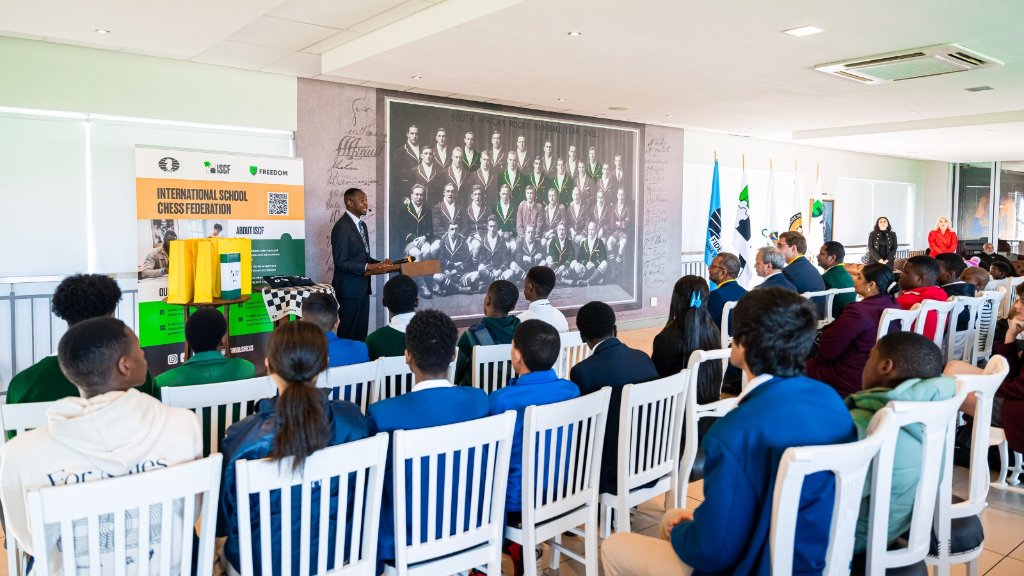
As part of the social outreach programme, championship representatives met 50 students from three local schools. Each school received chess equipment to support its local programme, while the children were given commemorative gifts.
Timur Turlov, president of the International School Chess Federation and founder and CEO of Freedom Holding Corp., believes the team format helps children understand that meaningful achievements are rarely the result of individual effort alone.
It is natural for people to come together, and only as a community can we create truly great things. Behind every major institution and enterprise is a team of people. If you have a strong team, you can achieve great results and create something genuinely special.
— Timur Turlov, President of the International School Chess Federation
He stressed that it is important not only to nurture individual talented players, but also to create an environment in which an entire group of children can develop.
When not just one person, but an entire team or school becomes strong, it creates many more opportunities for growth. You can rely on your teammates and build something unique together.
The participants' stories illustrated this principle. Three children from the same family — Davidson, Trevor and Patricia Waweru — played for the Kenyan team that finished second. They studied and trained together before going on to win continental silver.
The battle for bronze continued until the final round. Welgemoed Primary School drew its decisive match against Namibia 2–2. The result allowed the South African school to maintain a one-point advantage and secure a place on the podium.
Chess as an Investment in Human Potential
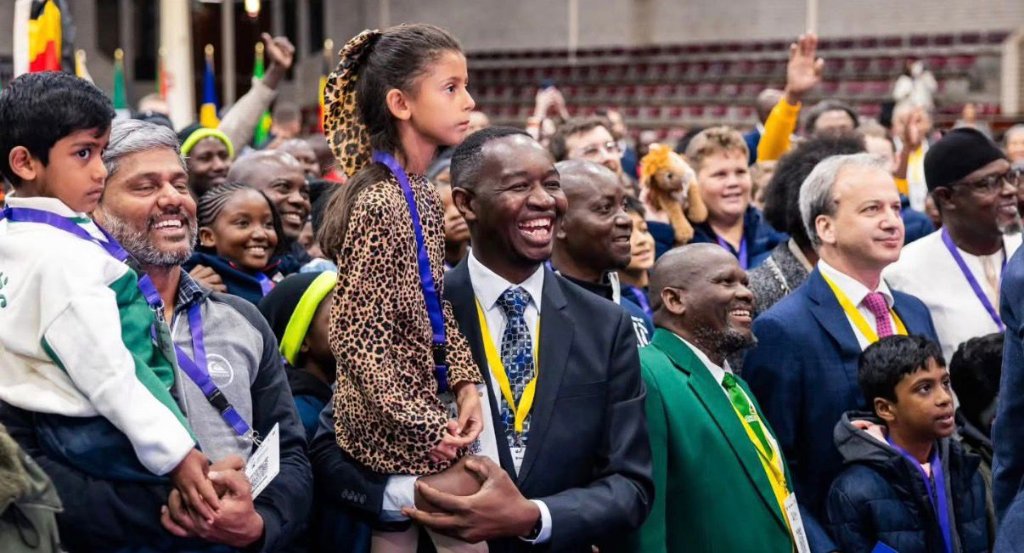
Reuben Salimu (centre) with Theeran and Sophia — chess builds communities and opens doors for the next generation.
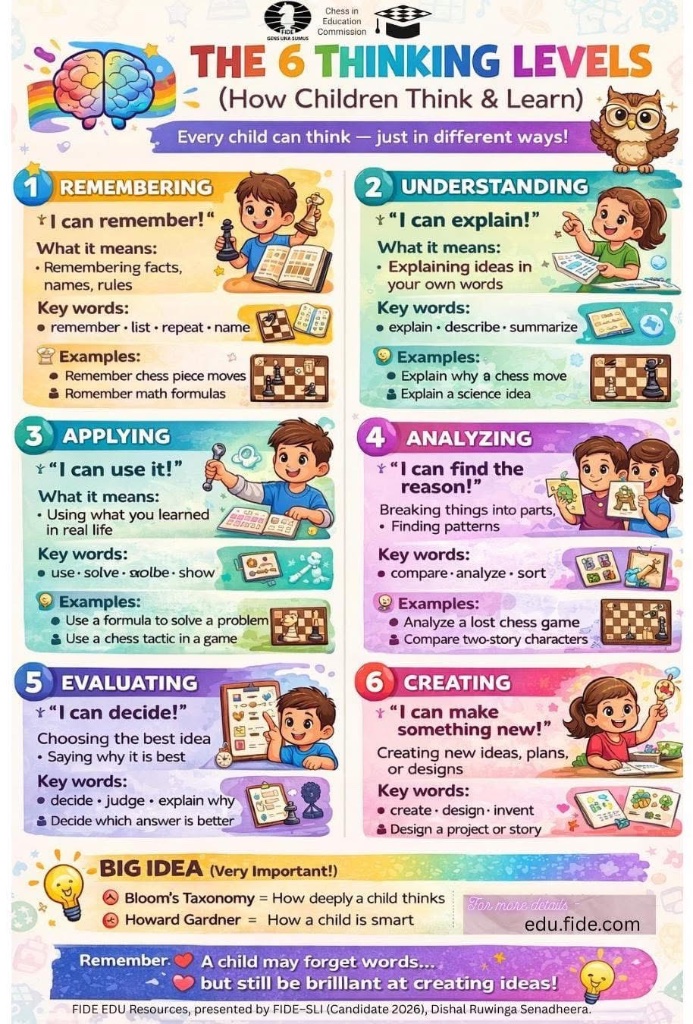
The development of school chess is increasingly viewed as more than a sporting initiative. Organisers and participants associate chess with skills that are valuable in education and professional life, including concentration, strategic thinking, responsibility for decisions and the ability to analyse mistakes.
For children from small towns, rural areas and disadvantaged communities, chess can open doors to opportunities that might otherwise be difficult to reach. It can introduce them to an international environment and new mentors, while giving them the chance to represent their school and country.
The tournament in Stellenbosch included an all-girls team from Sengwa Primary School, located in the rural district of Gokwe in Zimbabwe. For several of the players, the journey to South Africa included their first-ever flight.
One of the players, Makanaka Chirefu, said chess had helped improve her problem-solving abilities and performance in mathematics. After returning home, she planned to teach the game to other children.
Stories like these are not a substitute for systematic data on educational outcomes. They do, however, illustrate the mechanism through which investment in chess can generate social impact: a child gains access to training, then to competition, international experience and new opportunities — and may later pass that knowledge on to others.
From a Single Tournament to an International System
The World Schools Team Championship was launched in 2023, when the first tournament was held in Kazakhstan. Since 2025, the competition has developed under the auspices of FIDE in partnership with the International School Chess Federation.
In 2026, the championship was transformed into an international cycle of continental stages followed by a Grand Final. The first stage was held in Almaty, with Stellenbosch hosting the second. The strongest teams from each region are given the opportunity to continue competing at the global level.
This structure requires significantly more resources than a single tournament. Organisers must pay for venues and arbiters, manage logistics, involve schools and national federations, and provide educational and cultural programmes.
According to preliminary estimates provided by the organisers, the Asian stage cost approximately $360,000, while spending on the African stage was comparable. The four continental stages are expected to require a combined budget of about $1.5 million.
Freedom Holding's Role
Freedom Holding Corp. served as the main sponsor of the African Continental Stage and is the General Partner of the International School Chess Federation. Its support covered not only the competition itself but also its educational, cultural and social programme.
Investment in the school championship forms part of the group's broader chess strategy. According to the company, Freedom allocates more than $15 million annually to the development and promotion of chess. The projects it supports include school and corporate tournaments, FIDE events and major international competitions.
Freedom Holding Corp. is a Nasdaq-listed financial and technology group operating in 22 countries. Kazakhstan remains its main operating market, where the company is developing a digital ecosystem centred on the Freedom SuperApp. For the financial year ended 31 March 2026, Freedom reported revenue of $2.19 billion and total assets of $13.16 billion.
Another area of investment is digital chess infrastructure. In 2026, Freedom announced the acquisition of ChessBase, a global provider of chess software, game databases and analytical tools. The company plans to invest approximately €5 million in its further development, including technology upgrades and artificial intelligence solutions.
What Remains After the Final Round
The Stellenbosch tournament showed what becomes possible when schools, federations, public institutions and corporate funders work together. But the real test will not be the number of teams, the size of the budget or the visibility generated during one week of competition. It will be whether the children continue playing, whether local schools build lasting programmes, and whether the equipment and partnerships remain useful after the tournament has moved to another continent.
That is the point at which sponsorship becomes investment.