




## 1. What Calculation Really Is (And What It Is Not)
Calculation is disciplined analysis of forcing moves without guessing. It is:
- Structured
- Intentional
- Based on cause and effect
It is not:
- Randomly looking at moves
- Hoping your opponent blunders
- Analysing everything on the board
Strong players calculate less — but better.
## 2. The Non-Negotiable Order of Forcing Moves
Every calculation starts the same way.
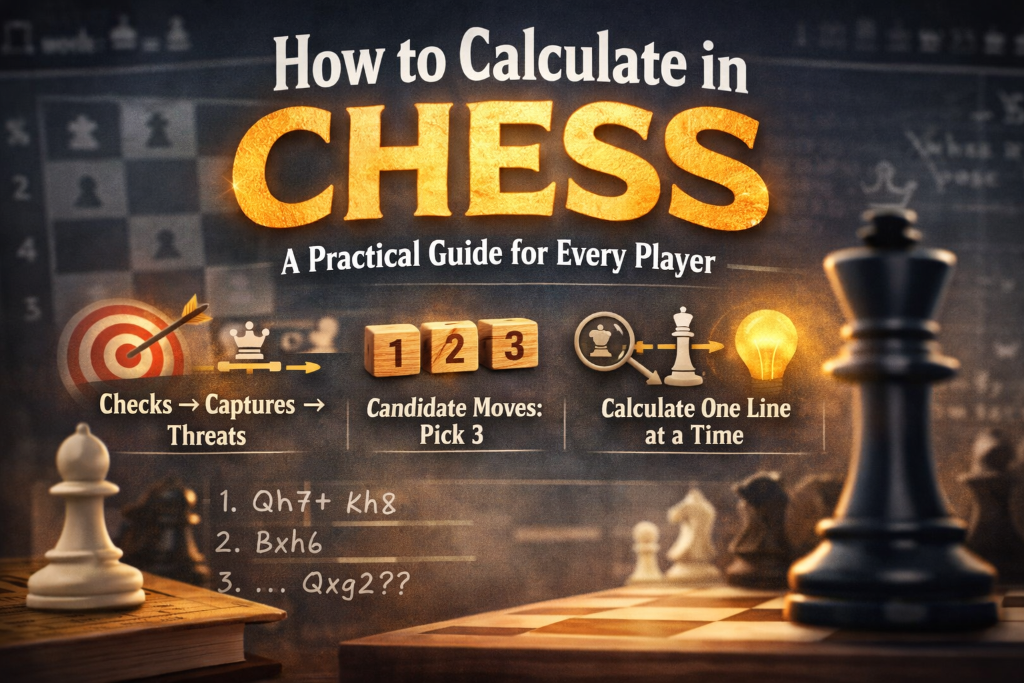
This order matters because forcing moves limit your opponent's choices. If you ignore this order, you will:
- Miss tactics
- Miss defensive resources
- Blunder material
Before you calculate anything, ask:
"Do I have a check?
Most decisive tactics live here.
## 3. Candidate Moves: The Gatekeeper of Good Calculation
Before calculating, you must first choose candidate moves. A candidate move is a move worth calculating.
Rules:
- Choose no more than three
- Each must be forcing or clearly improving
- Do not calculate before choosing them
Example:
"My candidate moves are Qh7+, Bxh6, and Nd5."
This step prevents:
- Overthinking
- Time trouble
- Chaotic analysis
Calculation begins only after candidates are locked in.
## 4. One Line at a Time (The Most Broken Habit)
Most players fail at calculation because they jump between lines.
Finish the line before changing the line.
How to calculate:
- Play your candidate move
- Assume the opponent's best defence
- Continue until the position is clear
Do not branch early.
## 5. Control Your Visualization
After every imagined move, pause and ask:
- What changed?
- Who is better?
- Is there a new threat?
Track:
- Material
- King safety
- Piece activity
- Tactical threats
If you cannot describe the position in words, you are guessing.
## 6. Knowing When to Stop Calculating
Over-calculation wastes time and confidence. You should stop calculating when:
- The material outcome is clear
- King safety is decided
- No forcing moves remain
A strong mental cue:
"I stop calculating when the position becomes strategically stable."
This protects your clock and your focus.
## 7. Review the Right Way After the Move
Improvement happens after the move is played.
- Which forcing move did I miss?
- Where did my visualization break?
Avoid emotional reactions.
## 8. How to Train Calculation Effectively
A simple weekly structure:
- 10 minutes: identify forcing moves only
- 15 minutes: calculate single lines deeply
- 10 minutes: review mistakes and patterns
Consistency matters more than difficulty.
## Final Thought
Calculation is not about brilliance. It is about discipline under pressure. If you train the process, the results will follow. Strong players don't see more moves — they see the right ones.

